The Title Inside Out Back Again Means
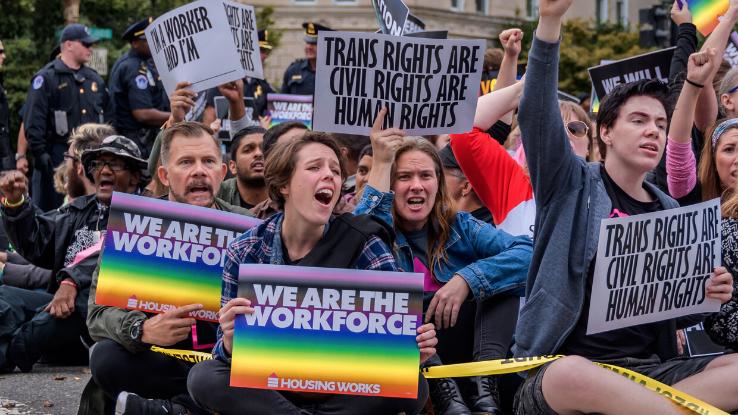
In June 2020, the Supreme Court of the United States ruled that, under Title VII of the Civil Rights Act of 1964, LGBTQ+ workers are protected from workplace discrimination. For the half-dozen-3 majority ruling, Justice Neil M. Gorsuch wrote, "An employer who fires an individual just for being gay or transgender defies the police." For those unfamiliar with the Civil Rights Act of 1964, Title Seven'southward language "bars employment discrimination based on race, religion, national origin and sex" — and, now, that language firmly applies to discrimination based on sexual orientation and gender identity.
The ruling is a landmark victory for many reasons, but chief among them is that this was the first major instance that outrightly protected transgender rights. Before, information technology was legal in more than one-half of usa to fire workers for being gay, bisexual, transgender, or queer. That is, even though gay marriage has been the constabulary of the land since 2015, LGBTQ+ folks in some states could get married over the weekend — then fired on Monday, merely for living openly and truthfully with their aforementioned-sex spouse.
"This is a simple and profound victory for [LGBTQ+] civil rights," Columbia law professor Suzanne B. Goldberg told The New York Times. "Many of usa feared that the court was poised to gut sex discrimination protections and allow employers to discriminate based on sexual orientation and gender identity, withal it declined the federal government'southward invitation to take that damaging path." Notwithstanding, all 50 states nonetheless recognize at-will employment. Though some have placed limitations on it — in Montana, there'south but an initial six-month probationary period that's at-will — this prescript tin still be problematic. Let's suspension it down.
What Is At-Volition Employment?
Never heard of at-will employment? Chances are, if yous're employed in the United states of america, you're an at-will employee. The term is used in U.Southward. labor constabulary and allows the employer to dismiss an employee for any reason and without warning — no "just cause" needed. In theory, this puts employees and employers on equal footing: Both can break off a working human relationship without alert, but opponents of at-will employment bespeak out that information technology leads to inequality of bargaining ability. In essence, the power dynamic is nonetheless off, with the scales tipped in the employer's favor. And then, if at-volition employment is terminated, the other party has no legal recourse.
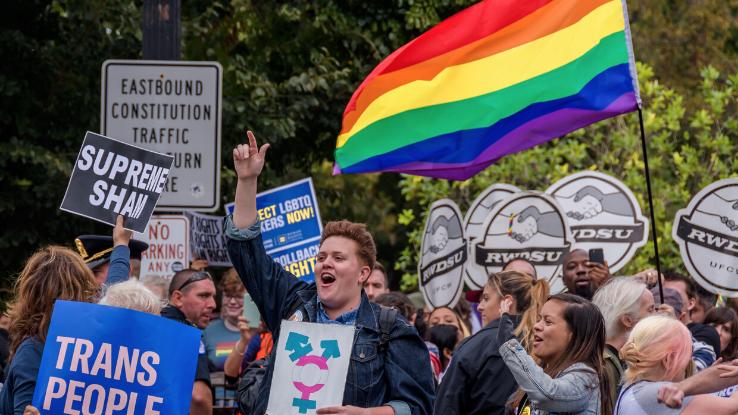
Of form, there are exceptions: Employers can't burn down employees for a reason that's deemed illegal, i.e. an employee tin't be fired for their race, organized religion, sex and all of the other classes protected by Title Seven and the Americans with Disabilities Deed. Additionally, employees tin can't be fired out of retaliation for performing a legally protected activeness (whistleblowing, filing harassment suits, etc.), nor can they be fired outside of the terms outlined in their contract. So, what's the problem with at-will employment? The reasons are numerous — non unlike the myriad absurd reasons for which an employee tin be fired.
Why Is It Essential in the Fight for Workers' Rights to Terminate At-Will Employment?
At the stop of the day, there's no guarantee that at-will firing doesn't stem from employer prejudice. As Moshe Marvit points out in an article for The Courier by Casey Quinlan, "Unless y'all're a member of a union and in that location's a bargaining agreement that gives but crusade, they could merely say y'all're not a team player. You're not a fit." A May 2020 poll from Alexander Hertel-Fernandez, Data for Progress, and the Omidyar Network revealed that 68% of folks surveyed disagreed with the argument that "employers should be able to fire workers for whatever reason."
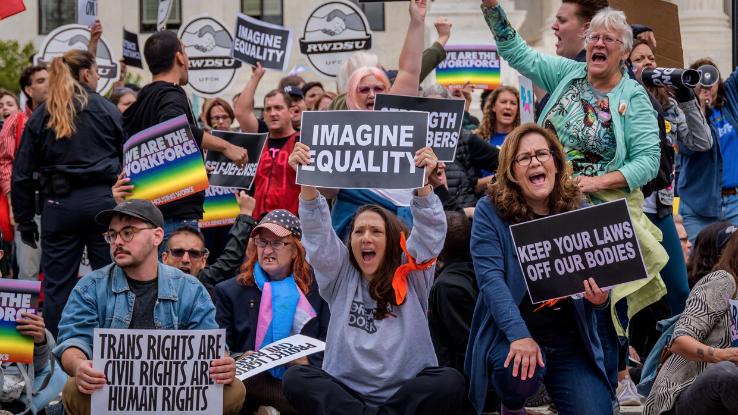
Those respondents aren't alone: From a New York Times op-ed that made a case for folks having "a legal correct to your job" to Senator Bernie Sanders galvanizing the move to create a national constabulary against termination without "simply cause," the momentum to end at-will employment seems to be growing.
Why is ending at-will employment a good thing for workers' rights? Offset off, if an employee is fired with no justification given, just they experience as though they were illegally discriminated confronting, it'south upwardly to that fired employee to prove the illegal termination. "After the worker makes out a case of discrimination, the employer can and then point to some other basis for the termination, benefiting from an at-will presumption that permits employers to fire workers for almost whatsoever or no reason," notes Data for Progress author Jared Odessky. "In reality, employers can just invent reasons later the fact. The burden then falls to the worker to evidence that the reason the employer gave was a lie."
In addition to removing this brunt from employees, moving from an at-will employment system to one that requires "simply cause" for termination would help employees come up forward when they encounter harassment or other toxic and illegal behaviors in the workplace — they'll feel even more protected when they do so, knowing a cantankerous employer won't fire them in a roundabout way for speaking out. Moreover, this new path would only fortify the hard-won civil rights outlined in Title Vii, allowing LGBTQ+ employees — and all workers — to feel safe in the workplace.

Source: https://www.reference.com/business-finance/workers-rights-title-vii-protections-at-will-employment?utm_content=params%3Ao%3D740005%26ad%3DdirN%26qo%3DserpIndex

Enregistrer un commentaire for "The Title Inside Out Back Again Means"